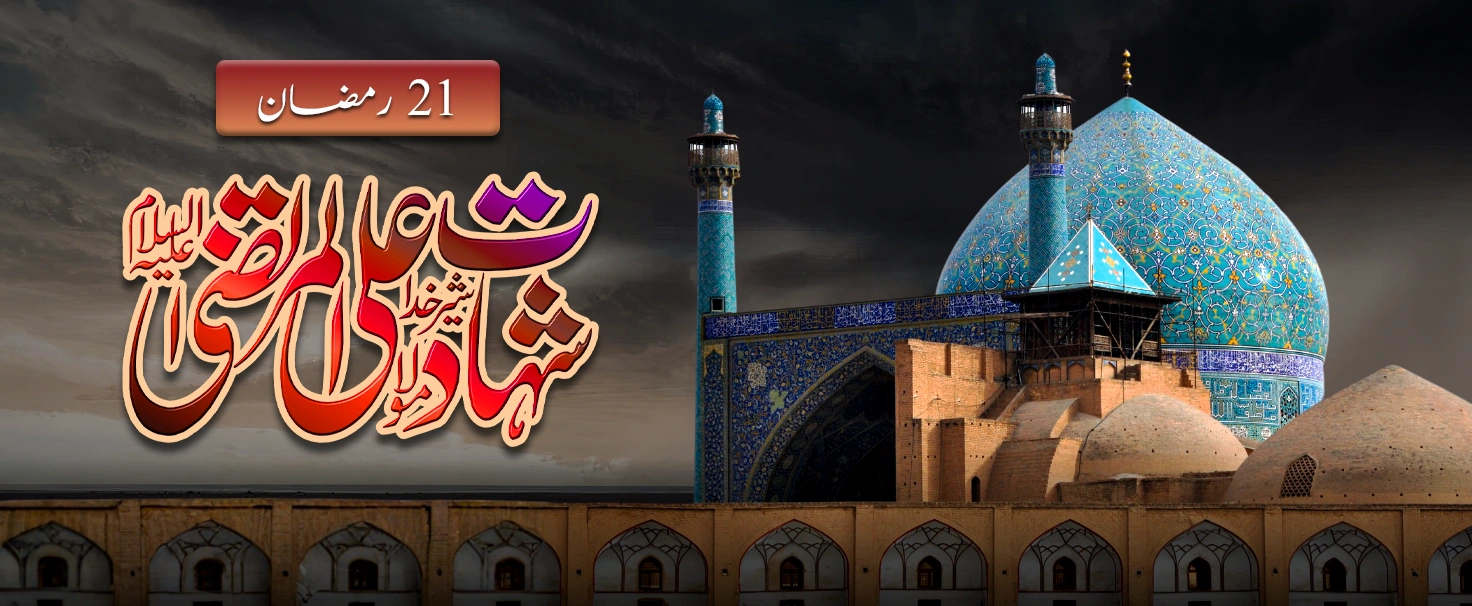
The 21st of Ramadan is a very somber day for the Muslim Ummah. This date marks the martyrdom of Hazrat Ali ibn Abi Talib (RA). He was the fourth Caliph of Islam. He was the cousin of Prophet Muhammad (Peace Be Upon Him). He was also the son-in-law of the Holy Prophet Muhammad (Peace Be Upon Him). This day is a time for deep grief. It is also a time for great reflection.
We remember his life and his deep love for Allah. We remember his death in the holy month of fasting. This day falls within the last ten days of Ramadan. These are the most blessed days of the year. On this day, a great pillar of Islam fell. The world lost a man of truth. We honor His memory by learning from his life. His sacrifice teaches us about faith and duty.
Who was Ali ibn Abu Talib (RA)?
Hazrat Ali (RA) was a man of high status. He was the son of Abu Talib. He was born inside the Holy Kaaba in Makkah. This is a very rare honor from Allah. No other person was born inside the Kaaba. He was the first cousin of Prophet Muhammad (Peace Be Upon Him). The Prophet Muhammad (Peace Be Upon Him) raised Hazrat Ali (RA) in his own home. Hazrat Ali (RA) learned his manners from the best of mankind.
He was the husband of Hazrat Fatima (RA). She is the leader of the women in Paradise. He was the father of Imam Hasan (RA) and Imam Hussain (RA). These were the beloved grandsons of the Prophet Muhammad (Peace Be Upon Him). Hazrat Ali (RA) had many great titles. He was called "Al-Murtaza." This means "The Chosen One." He was also called "Asadullah." This means "The Lion of Allah."
His Early Life and Acceptance of Islam
Hazrat Ali (RA) was very young when Islam began. He saw the Prophet Muhammad (Peace Be Upon Him) pray to one Allah. He was only ten years old at that time. He chose to follow the Prophet Muhammad (Peace Be Upon Him) right away. He was the first child to accept the call of Islam. He did not worship any idols. He always kept his heart pure for Allah. He faced many hardships in Makkah.
The people were very mean to the Muslims. Hazrat Ali (RA) never left the side of the Prophet Muhammad (Peace Be Upon Him). He was a loyal friend. He was a brave supporter. He protected the Prophet Muhammad (Peace Be Upon Him) from the enemies. His childhood was full of lessons for young people. He showed that faith does not depend on age.
The Courage and Bravery of Hazrat Ali (RA)
Hazrat Ali (RA) was the bravest soldier of Islam. He fought in almost every battle for the faith. In the Battle of Badr, Hazrat Ali (RA) killed many famous enemies. In the Battle of Uhud, Hazrat Ali (RA) stood like a rock. Hazrat Ali (RA) protected the Prophet Muhammad (Peace Be Upon Him) when others ran away. During the Battle of the Trench, Hazrat Ali (RA) killed a huge warrior.
This warrior was famous for his strength. Hazrat Ali (RA) defeated him with one blow. At the Battle of Khyber, Hazrat Ali (RA) did something amazing. Hazrat Ali (RA) lifted a heavy iron gate with his hands. Hazrat Ali (RA) used it as a shield to win the fort. Hazrat Ali (RA) showed His divine strength. Hazrat Ali (RA) carried the Zulfiqar sword. Hazrat Ali (RA) never turned his back on the enemy. Hazrat Ali (RA) feared only Allah.
His Knowledge and Wisdom
Hazrat Ali (RA) was the most learned man of his time. He was a master of the Holy Quran. He knew the inner meaning of every verse. The Prophet Muhammad (Peace Be Upon Him) said a very famous thing about him. He said, "I am the city of knowledge." He then said, "Ali is its gate." This means we must learn from Hazrat Ali (RA) to know the Prophet Muhammad (Peace Be Upon Him). Hazrat Ali (RA) was a great judge.
He solved cases no one else could. Hazrat Ali (RA) said with emotion. His words were full of deep meaning. He taught people about the oneness of Allah. Hazrat Ali (RA) taught people about the soul and the world. He said that knowledge is better than wealth. Knowledge protects you, but you must protect wealth. He was a true light for the scholars.
His Role as the Fourth Caliph of Islam
Hazrat Ali (RA) became the Caliph after Hazrat Usman (RA). This was a very difficult time. There were many fights within the Muslim world. Hazrat Ali (RA) wanted to bring peace and justice. Hazrat Ali (RA) did not care for the gold or the palace. He lived a very humble life as a ruler. Hazrat Ali (RA) wore old clothes with patches. Hazrat Ali (RA) ate simple bread with salt. Hazrat Ali (RA) sat on the floor with the poor people.
Hazrat Ali (RA) was very strict with public money. Hazrat Ali (RA) did not give any extra money to his own family. He said the Caliph is a servant of the people. He worked day and night for the Ummah. He wanted to follow the path of the Prophet Muhammad (Peace Be Upon Him). He was just-leader in the time of fitna.
The Incident of His Martyrdom
The 19th of Ramadan was a dark day. It was the year 40 AH. Hazrat Ali (RA) was in the city of Kufa. He went to the Grand Mosque for the Fajr prayer. An evil man was hiding in the dark. His name was Abd al-Rahman ibn Muljam. He had a sword dipped in deadly poison. Hazrat Ali (RA) was bowing in prayer to Allah. The man struck Hazrat Ali (RA) on the head.
The sword cut deep into his skull. Hazrat Ali (RA) said, "By the Allah of the Kaaba, I have won!" He did not curse his killer. He told his sons to treat the killer with mercy. He asked them to give him food and water. This shows his great character even in pain. The poison spread in his noble body for two days.
The Historical Impact of His Martyrdom
Hazrat Ali (RA) died on the 21st of Ramadan. This loss was too big for the Muslims. The era of the four Rightly Guided Caliphs ended with him. The world lost its most honest judge. The poor lost their best friend and helper. His death left a void that no one could fill. People cried in the streets of Kufa. They felt like orphans without him. His martyrdom showed that truth has a high price.
He died while praying to Allah. He died during the holy month of fasting. This made Hazrat Ali (RA) death even more sacred. Hazrat Ali (RA), blood watered the tree of Islam. Hazrat Ali (RA) sacrifice made the faith stronger. We still feel the pain of his loss today.
21st Ramadan and the Last Ten Nights
The death of Hazrat Ali (RA) makes the 21st night very special. These are the nights of seeking Allah. These are the nights of Laylat al-Qadr. Muslims stay awake all night to pray. They remember the pain of the Ahl al-Bayt. They remember the blood of the Caliph. This adds a layer of sadness to our worship. We ask Allah to forgive our sins.
We think about the trials of the early Muslims. The 21st of Ramadan is a night for tears. It is a night for asking for the same faith as Hazrat Ali (RA). We pray for his high station in Jannah. These nights remind us that life is short. Only our deeds for Allah will remain.
Lessons of Justice and Patience
Hazrat Ali (RA) taught us how to be fair. He said that a state can survive with kufr. He said it cannot survive with injustice. Hazrat Ali (RA) always stood for the weak against the strong. He was very patient during hard times. Hazrat Ali (RA) saw many people turn against him. Hazrat Ali (RA) never lost his calmness. Hazrat Ali (RA) always focused on his duty to Allah.
Hazrat Ali (RA) showed us that power should not change a man. He remained the same humble person his whole life. Hazrat Ali (RA) taught us to forgive our enemies. Hazrat Ali (RA) taught us to be kind to the needy. These lessons are vital for us today. We must be just in our homes. We must be just in our jobs. This is the way of Hazrat Ali (RA).
His Legacy in Islamic History
The legacy of Hazrat Ali (RA) will never die. He is the father of the lineage of the Prophet Muhammad (Peace Be Upon Him). His descendants are the noble Sayyids. His words are collected in the book Nahj al-Balagha. This book is a treasure for the world. It talks about Allah, man, and the universe.
He is the hero of every young Muslim. He is the model for every soldier. He is the guide for every seeker of truth. His name is written on the walls of mosques. His name is written in the hearts of the believers. He is the "King of Men." He is the "Leader of the Pious." His legacy is the soul of Islamic history.
Applying His Teachings in Our Daily Lives
We must do more than just remember his name. We must follow Hazrat Ali (RA) actions in our lives. We should be brave when we see something wrong. We should be honest in our talks. We should help the orphans and the widows. Hazrat Ali (RA) used to carry food to them at night. He did not want anyone to see his charity. We should be humble even if we are successful.
We should seek knowledge from the cradle to the grave. We should value our time in Ramadan. We should pray with the same focus as Hazrat Ali (RA) did. His life is a map for us. If we follow it, we will not get lost. Hazrat Ali (RA) showed us the road to Paradise.
Conclusion: A Legacy That Lives Forever
Hazrat Ali (RA) was a man of many wonders. Hazrat Ali (RA) was a lion in the field of war. Hazrat Ali (RA) was a monk in the house of prayer. He was a father to the poor. He was a brother to the weak. On the 21st of Ramadan, he went back to Allah. He left behind a world of wisdom. He left behind a path of purity.
We salute his courage and his faith. We pray for his family and his companions. May Allah help us follow the path of Hazrat Ali (RA). May Allah keep us on the straight path of Islam. His story is not just a story of the past. It is a guide for our future. His light will shine until the end of time.